The post Ground-breaking, Solar Powered, Gas-Free Caravan Powers Up In Melbourne appeared first on ERV.
]]>With energy-efficient thermal rating construction and a revolutionary energy supply, self-contained, almost unlimited power for caravans has become a reality with our solar-boosted ERV available for sale from March next year.
This comes after we successfully completed a harrowing, plug-free test journey of 20,088km across the country over 176 days.
Unveiled earlier this year, our latest development of this hi-tech, electric, ‘smart’ caravan platform was built by us at, Retreat Caravans, in conjunction with the technology company, OzXCorp.
By making use of an unprecedented 2033 watts of PV Solar lithium-ion battery bank coupled with extensive solar panels and a 5000-watt Smart Inverter, it delivers enough power for the simultaneous use of a range of appliances for extended periods of time.
Our first test model is a 20-foot caravan powered by a self-generated 240-volt system with a special inverter that does not need a gas system for appliances.
In a recent interview, our very own Drak said, ‘’this proves that the revolutionary new ERV is a renewable power source on wheels that serves as a home-away-from-home.”
He also explained that the technology employed in the development of the ERV is not only for Retreat, but has the potential of being offered to other Australian caravan manufacturers as well as other markets.
“Retreat has a global interest in the technology and development of this caravan”, he said, “and we know that it will take off”.
While on the test journey our test team powered two other caravans with its impressive solar system.
Even with two air conditioners and several appliances running, the ERV still had power to spare, even when it was used in the shade.
The integrated, automotive-grade 16 kW/h battery is conservatively de-rated to 14.3 kW/h for consistent and reliable power.
The self-generating, holistically engineered battery energy storage system promises a revolutionary, truly off-grid experience. The smart inverter has a huge 5000 Watt continuous rating.
“The electrically powered lights will be the last function to go, however, it is very unlikely that this will happen”, said Drak.
“When the battery gets critically low, the refrigerator and lights will continue to function to the end to ensure the occupants are kept safe and that they have food.”
Because there is no gas system there is no need for ventilation. In place of a ventilation system, the ERV has 15 solar panels on the roof.
A patented curved mounting system allows the lightweight solar panels to lie above the roof rather than flat.
This system allows the sun’s rays to enter and also keeps the panels cool by reducing heat flow through the roof cavity.
The solar panels cover most of the caravan’s roof leaving just enough space for a vent or antennas if needed. Different panel layouts are available on certain production models.
The air conditioning unit is located underneath the bed to free up roof space for the panels.
At a demonstration of a breakfast scenario at the Perth 4WD show, the ERV showed a kettle, toaster, hairdryer, air conditioner, and induction cooktop, all operating simultaneously and drawing power from the batteries.
“It was pointed out to onlookers that at the same time the TV, full-size fridge, and lighting were running simultaneously as well” said Drak.
“All this was done without plugging into grid-connected mains, using a generator or any other source of external power to continuously run a combination of 240 Volt appliances up to 5000 Watts.
Because it is a gasless caravan, there is no need for gas as an alternative energy source, the ERV does not need to comply with the requirements of gas regulations such as additional vents in the roof.
The elimination of vents also greatly reduces the amount of dust that finds its way into a caravan when out on the road.
Leading-edge insulation means occupants can enjoy a better-controlled environment.
The chassis-integrated energy system of the ERV is dustproof as well as water-resistant to a depth of 1 metre for about ten minutes.
It also features a 50mm crush-resistant shell that protects the batteries in severe off-road conditions.
With the benefits of cutting edge lithium technology, the electrical system of the ERV is fed by a 48 Volt, OEM automotive-grade, lithium-ion battery, up to 2033 Watt solar system based on the largest size unit, and a 5000 Watt Smart Inverter.
The size of the lithium battery is equivalent to a 90-litre water tank weighing approximately 115kg.
A ‘wow’ factor of the ERV’s electric system is its 15-Amp, heavy-duty, industrial socket outlet located in the tunnel boot capable of running a 3-pin, 15-Amp welder.
A fully self-contained energy pack provides the caravan and its occupants the opportunity to travel off-grid, even to remote areas that have previously been difficult to access.
It also provides economic benefits of not needing a powered caravan site and the potential of saving on fuel consumption due to the flush roof design made possible by the lack of an exposed air conditioner.
A Retreat van was used as a donor for the ERV with structural chassis changes to allow space for the lithium-ion battery beneath the floor where the van’s potable grey water tanks are located.
The 20ft ERV2 model that was displayed in Perth had a tare weight of 2700kg, a 150mm A-frame, a fibreglass composite body, DO35 coupling, 10’’ drum brakes, a Dexter sway control system, and 265/16 Mickey Thompson AT tyres on 16” wheels.
Standard suspension on the ERV is Control Rider TS with twin shocks. Buyers will also have an option of a Simplicity coil or AI-Ko suspension, as well as airbags.
Other features include electric steps, an optional outdoor TV, powered awning, a fusion sound system, and a slide-out for a Weber barbecue.
External features include a single spare wheel carrier, an external shower, a dual-slide-out toolbox, a jerry can holder, a fold-down picnic table, and a reverse camera.
Internal appliances include an induction cooktop, a convection oven and grill, a 274 litre fridge, a 24-inch TV, and LED lighting.
The ERV also features a Swift 48-Volt hot water system and a 12-Volt water pump.
The contemporary styled interior of the van includes acrylic doors, tiled shower recess and splashback, waterfall kitchen benchtop and plenty of storage space under the seats and bed.
Also included in the ERV2 model is a ceramic cassette toilet, a 110-litre grey water tank, two 110 litre water tanks, a 65-litre drinking water tank, and a 3kg top-loader washing machine.
The Retreat ERV range will be available for purchase from March 2020 in 5 body sizes ranging from 18ft 6in – 22ft 6in with a range of different layouts.
Prices start from $109,900. An ERV2 displayed at the 4WD show was priced at $119,900. The larger 2033 Watt solar panel ERV5 is the top-spec model.
The ERV caravan by Retreat Caravans is the first to leverage the power technology provided by OzXCorp.
However, consumers will have to wait a while longer for a production version of OzXCorp’s Hybrid Drive System that utilizes electric hub motors to power the wheels of a van.
The post Ground-breaking, Solar Powered, Gas-Free Caravan Powers Up In Melbourne appeared first on ERV.
]]>The post The Solar Powered RV Of The Future appeared first on ERV.
]]>One of the first major differences that stands out is the removal of the gas bottles that are traditionally attached to the front of the A-frame.
No gas is required for the operation of the E-RV, which also means that the accompanying gas vents are removed as well.
The removal of the gas vents protects the interior from dirt and debris if you travel off-road.
The absence of the vents also allows for a more solid composite panel construction that greatly improves the vehicle’s insulation.
This makes it much easier to control and maintain a comfortable temperature throughout the day.
The entirety of the vehicle’s roof is covered with highly durable solar panels.
Because of this, the standard top-AC unit had to be moved beneath the bed. It sacrifices a small amount of storage space but cleans up the E-RV’s appearance.
The E-RV relies on some of the best solar panel technology available.
The panels can produce 2033 watts of energy that it supplies to an integrated 14.3kW/H battery.
Finally, the system uses a 5000-watt inverter to produce the AC electric current many devices and appliances require.
The entire electrical system is leaps and bounds ahead of anything else on the market today.
As a matter of fact, it has the potential to deliver more energy than a fully-stocked modern kitchen a traditional home might use.
You can safely use your favourite appliances such as air conditioners, heaters, lights, toaster and more, all simultaneously.
The E-RV has more going for it than just a sophisticated off-grid power system.
The battery itself is located in a channel that also features a complete off-road suspension system and high-quality off-road tyres from Micky Thomson.
On one end of the A-frame is a D035 coupling, a jerry can holder, and a dual-side toolbox.
On the outside, you’ll find many of the modern features you’ve come to expect from a high-end RV.
That includes a slide-out barbecue and picnic table, a lined tunnel, a swing, a shower, and an arrangement of outdoor lights.
All of these are of course powered by electricity, including the barbecue.
On the underside of the frame are two water tanks with a 110-litre capacity, a single tank with a 65-litre capacity, and a grey water tank with a 110-litre capacity.
Step inside and you’ll be greeted with a lounge area featuring a trifold table and upholstered seats.
The nearby kitchen features a grill, an oven, and a stove with an optional rangehood. There’s also a refrigerator with a capacity of 247 litres.
You also have the option to cover the sink if you need additional counter space.
On the front end is a single bed with a three-piece bedhead and spring mattress.
On the opposite end is an ensuite that includes the shower, washing machine, sink, and toilet.
All of these features sound great on paper and they actually work perfectly in real applications as well.
The E-RV was part of our massive test trip that led to South Australia starting from the Kimberly.
The trip lasted for more than 176 days and the caravan travelled for more than 20,000km.
At no point in this trip did we need to stop and plug the caravan into an external power source.
There was even a point during the trip when three additional caravans were plugged into the E-RV to use its electrical power.
The biggest advantage of this new system is the obvious energy efficiency that was missing in previous attempts.
This energy efficiency comes not only from the solar panel and battery but also the construction of the RV and the thermal rating of the materials used.
Currently, the E-RV is on a limited production run.
There will be a total of five models produced that are between 5.6 m on the short end to 6.8m on the high end.
For now, you can view the current model on display at the famous Luxury RV Exhibit at McCallum Park.
This is part of the overall 4WD and Adventure Show and the E-RV will be a part of exhibit 58.
E-RV Information:
Price Range: $109,000 for the smallest model. Price increases with size.
Frame Construction: Composite
Off-Road Suitability: Yes
Warranty Duration: 5 Years
Weight: Unknown. The developers are currently making improvements to reduce the vehicle’s weight.
Dealer: Luxury Rvs at 4-6 Pickard Avenue in Rockingham
The post The Solar Powered RV Of The Future appeared first on ERV.
]]>The post All-electric OzXCorp Retreat Caravan’s Country Lap Completed appeared first on ERV.
]]>This is Australia’s very first fully-electric caravan and was able to travel comfortably around the country with large chunks of off-grid activity posing no problems.
The plan, now that it has passed the test, is to make its innovative technology available to other makers of RVs.
The caravan is a concept vehicle with electrics designed by OzXCorp, an Australian technology startup that partnered with Retreat Caravans to create the test product.
While regular caravans rely on a mix of fossil fuels and electricity, this Retreat caravan is all-electric.
The caravan has a 16kW/h battery bank which is supported by a 1540W solar array.
This battery is capable of powering the heating, cooling, lights and hot water via an energy management platform known as the DCX.
A 5kW, 240V inverter is used to power domestic appliances and can run a toaster, kettle, hairdryer and convection oven, so all of the ‘mod cons’ are available to users.
Our intrepid testers John and Fran Huett were on the road for a total of 178 days testing the OzXCorp Retreat.
According to the review by OzXCorp at the end of the test, all of the power and communication systems were free from mechanical stress, and there was no degradation to the capacity of the battery even after 178 days of daily use.
They feel this reinforces the validity of the design.
When the couple went off on the test run, OzCorp co-founder Andrew Huett said that while the look and feel of apartment-style living are clear in modern caravans, the functional side has not been completely addressed.
That is what OzXCorp is trying to sort out with their new design. They expected to find some problems along the way, but as the test went on they monitored all power outlets live via an internet connection.
They unplugged the caravan from the grid in Melbourne and set it off with the hope that it would not need to be plugged in for petrol, diesel or gas for the entire journey.
Thanks to the live data that was supplied, the company can show that there was no load-shedding or rationing of power to alter the statistics favourably.
They wanted a fluid, and truly self-sustaining, hassle-free experience, even in the event of cloud cover. And they managed exactly that.
If cloud cover ever gets too bad, it takes just 6 hours to fully recharge at a campsite.
The trip around the country finished at the Retreat Rally in Geelong, giving Retreat owners the opportunity to see the all-electric variation in person.
In typical fashion for a Retreat Rally, the team passed a hat around to raise money for the Cancer Council of Victoria, collecting $16,000.
The next plan for OzXCorp is to streamline the product and make something that other RV manufacturers can incorporate into their existing designs to make off-grid living a reality for RV enthusiasts all over the world.
Find out why you should go for our fully-electric Retreat caravan here.
For the original post written by Anthony Kilner, click here.
The post All-electric OzXCorp Retreat Caravan’s Country Lap Completed appeared first on ERV.
]]>The post The OzXcorp Gasless Caravan Is Headed Toward Its 17,000km Finish Line! appeared first on ERV.
]]>The crew were rather shocked by the need to resort to the use of the generator in order to boost the battery pack’s charge.
The team of adventurers spent four hot days at Big Horse Creek Camp (Gregory, NT) stuck in the shade.
Although temperatures were well up in the mid-30s, sunlight was in short supply thanks to the bumper crop of tourists at the campsite.
Everyday energy expenditure – running laptops and particularly air conditioning – drained the 14.2 kW/Hr battery pack down to just 1.4 kW/Hrs remaining.
That’s a State of Charge (SoC) of just 10 per cent.
Being stuck at a non-powered site, John and Fran opted for the quick fix, using a generator run to boost the batteries to 25 per cent SoC.
This gave them a comfortable margin to reach their next layover at Pussy Cat Flats campground.
The team knew full sun exposure would be available at Pussy Cat Flats.
John pointed out that one of this test journey’s goals was to refrain from using grid power, the generator, or the vehicle’s 12-volt Anderson plug to top up the battery.
The intent was to show that the electric caravan could be operationally independent of any non-solar power sources.
On this day, though, the generator was the best option to meet power needs without sun or vehicle assistance.
He also noted that reductions in power use – such as cutting the air conditioning down to three hours per day – would have slowed the test caravan’s power drain.
However, since the instructions for the test gave them the discretion to manage power usage as they saw fit, John felt the generator was the right solution.
Andrew Huett, OzXcorp director, flew to a rendezvous point with the crew in Darwin to check up on the tech and confirm everything was still operating properly.
This was also a handy opportunity to debrief with John and Fran before their next leg of travel toward Melbourne.
The final destination for the test van is the Retreat Family-Annual Get-together in Geelong, Victoria.
John and Fran are scheduled to arrive on September 15, giving other Retreat caravan owners the chance to see the test caravan up close and personal.
Check back with us for more details as our electric caravan and test crew tackles cloudy weather around Melbourne!
Find out why you should go for our fully-electric Retreat caravan here.
For the original post written by Anthony Kilner click here.
The post The OzXcorp Gasless Caravan Is Headed Toward Its 17,000km Finish Line! appeared first on ERV.
]]>The post Gibb River Road Is the Place for Many Adventures appeared first on ERV.
]]>The summary of their trip on this part of their journey is given below.
We have just seen the Kimberley, which is an amazing part of the country that we belong to.
The experience of driving during this tour was truly one that rattled our bones, the car, and the contents in the car and the van.
We came across rocks, corrugations, dirt, bulldust, ‘dead tyres’, more dust, camper vans, campers and caravans in their hundreds.
Travellers come with whatever they can when they want to experience all that the Gibb River Road has to offer.
The journey was fantastic, though hard, and we would gladly go over it again.
We drove in the conditions that were presented to us and incredibly, managed to come through unscathed.
The caravan held up very well. Nothing broke, nothing cracked, and in fact, all the cupboards remained intact with no hinges having let go, which is a credit to Retreat.
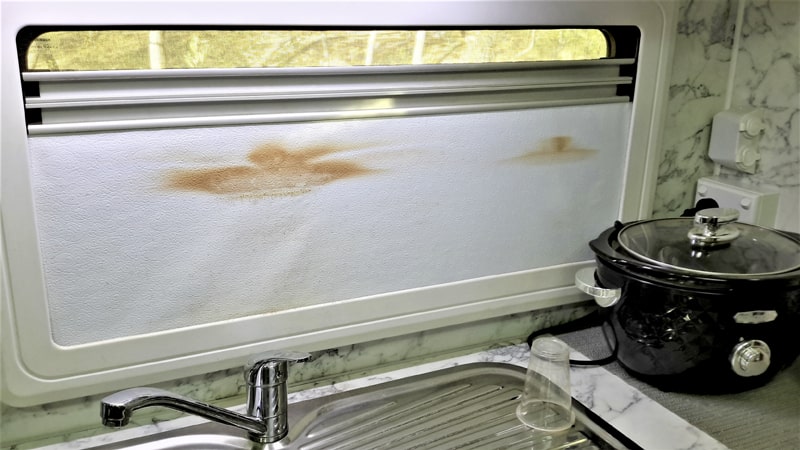
The windows did face a dust issue, but this did not concern us much, as it was an issue that was known.
Part of our testing on this trip was for the sealing of the windows without using additional silicone sealants.
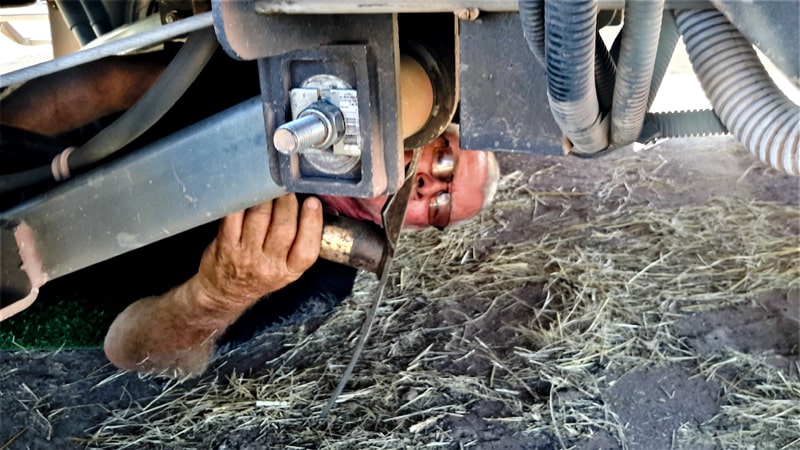
However, where we were let down was underneath, when the camber/caster bolts of the trailing arm were either loosened or fell out completely.
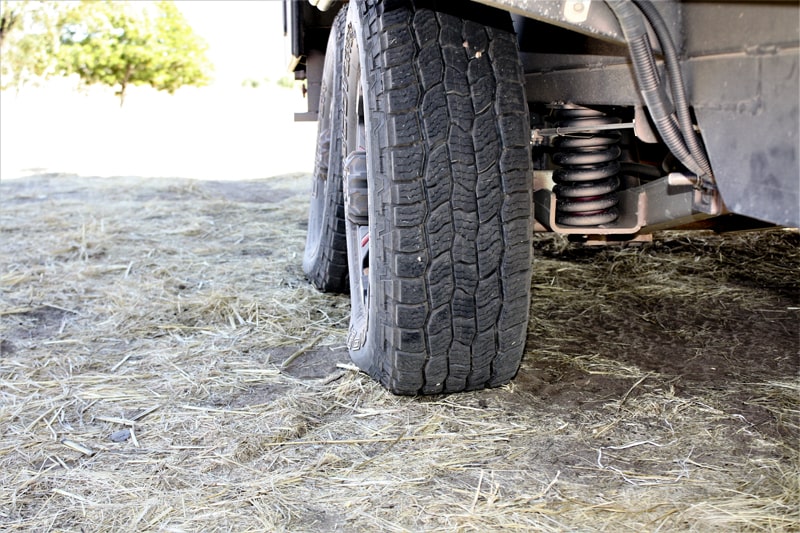
Both the car and van’s driver sides were constantly battered, while the passenger side was less affected because it ran through the edge of the road where the dirt is soft.
The suspension, otherwise performed, amazingly.
The induction plate sat on a rubber mat on the bench along with the slow cooker and the electric frying pan and stayed there the whole trip!
Even the clothes on coat hangers did not move, which is something that hasn’t happened to us previously.
Luckily, John’s engineering background made it easy for him to attend to the suspension problem that enabled us to get through.
However, the broken van had to be left at the side of the road until we got the parts that were required to make the needed repairs.
If we had not been able to find the needed replacement bolt or were unable to make the repairs, it would have required the bringing in of a tow truck, and that would have required a fair amount of expenditure.
So you need to be always prepared and make regular checks of the suspension of the car and caravan.
The Ford Ranger never missed a beat and did an excellent job probably because of the significant upgrades it went through for bolstering its reliability and touring performance for off-road conditions.
The best part of our trip was that we never had any problems with the power system, either its capacity, the use of power for daily needs, or solar recovery.
The system never faltered even when we drove through water, or when it was tested on hot afternoons or cold mornings.
Every appliance worked superbly, with the Dometic fridge/freezer and its compressor staying cold, while both the air conditioner and hot water were working like a charm.
There are no complaints from us because there has been nothing to complain about.
When we were at El Questro, we used the power of the electric caravan to charge a camper van, and it made no difference to our ability to function normally.
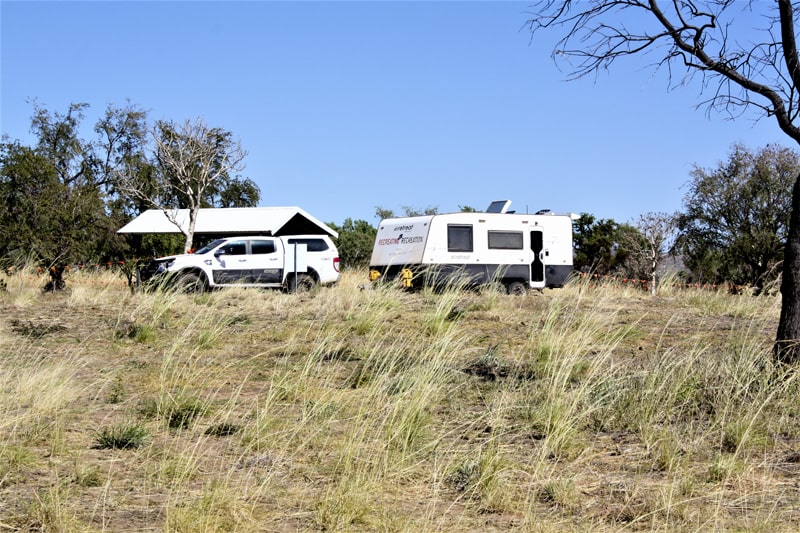
Our exposure to more sunlight in the north left our power staying at between 80 to 99 per cent SoC.
When you consider that we used the air conditioner for four hours every day, and did not go in for any supplementary charging, this was a great result.
Our carbon footprint until now has been zero as all the power for operating the caravan was from the sun.
This indicates a job well done by the passionate crew that designed and developed the system and is a credit to all those who were involved.
Watch this space to see more about the Retreat team’s adventures in Western Australia.
Find out why you should go for our fully-electric Retreat caravan here.
For the original post written by Anthony Kilner click here.
The post Gibb River Road Is the Place for Many Adventures appeared first on ERV.
]]>The post A Bout Of Food Poisoning, Cable Beach And Gibb River Road appeared first on ERV.
]]>It is this leg of the trip that is going to really put the van, as well as the crew, through their paces as our epic adventure continues.
It was at Cape Keraudrenthat Jon landed himself a nasty bout of food poisoning which meant we had to stay put for an extra night before continuing the trip with renewed vigour.
Barn Hill Station was the next location to head for with a refuelling stop at Pardoo Roadhouse and another one at Sandfire Roadhouse and by 2 pm we had arrived at Barn Hill.
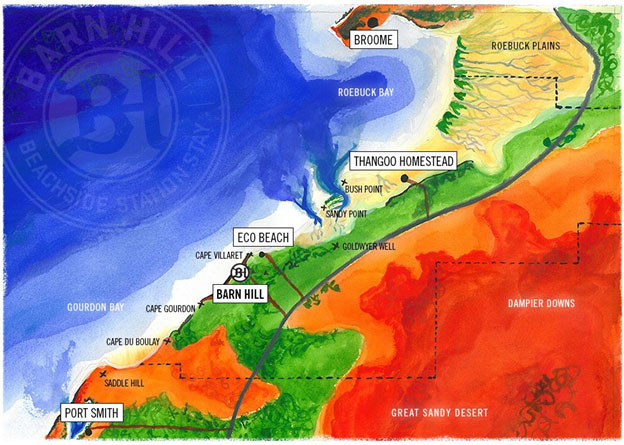
Barn Hill location [Photo credit to Barn Hill]
Set on around 430,000 acres at Thangoo Station, Barn Hill was a great place to stopover for a wonderful four days before we made our next move to Broome.
Thangoo Station is around 85km long and stretches between Port Hedland and Broome.
Bought by Alf and Maria Grey in 1960 this area is a working cattle farm.
In fact, there are 8,000 head of Braham cattle and the region is nothing short of spectacular.
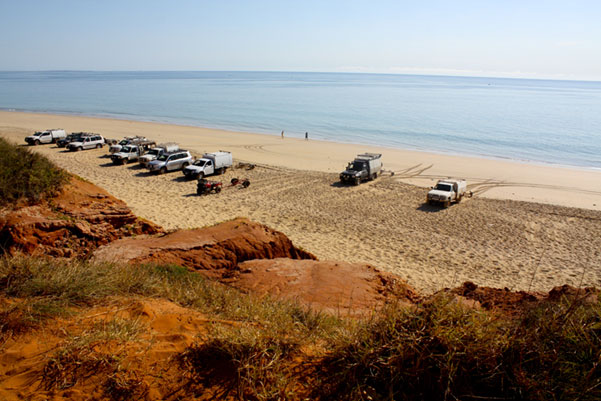
Beach driving in West Australia
After leaving Barn Hill behind, the next location was Broome (Cable Beach) which we travelled to via Roebuck Plains Roadhouse.
Traveller Tip: Roebuck Roadhouse is situated around 30km from Broome.
You will find a caravan park there with fees at $38 per night for each powered site (the only sites available there are powered, however, we didn’t need to plug in at all).
The recommendation to stay here came from several sources, instead of travelling on to Broome where the prices were much higher.
Our sources were absolutely spot on!
While at Broome the time came to make preparations for the famous (or infamous) Gibb River Road.
An abundance of information and maps were supplied by the Broome Visitor Information Centre which was very useful.
The ‘worse for wear’ tyre was replaced, shopping was sorted and a full check of the van and vehicle was carried out before the adventure continued.
Several rather excited individuals came up to the van wanting to know more about the ‘electrical caravan’ from John. Read more about electric caravan here: https://www.retreatcaravans.com.au/blog/no-sun-no-problem/
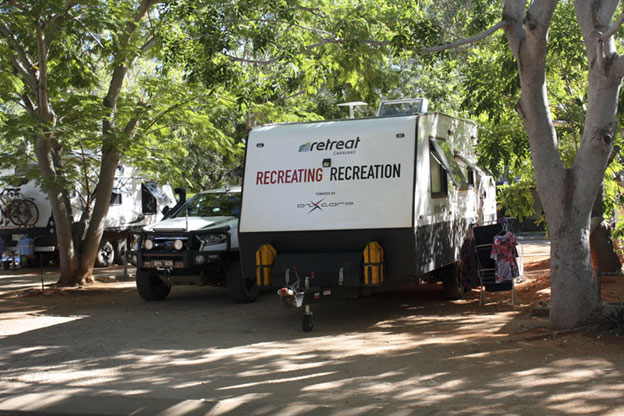
Camped at Broome
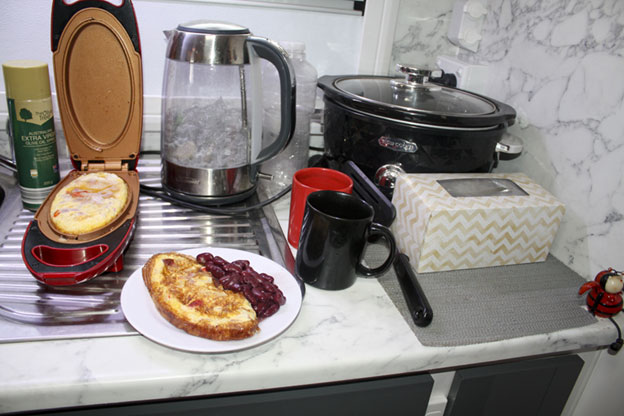
Cooking at 240 volts
We are now en route for the Gibb River Road which is sure to be the most demanding leg of the trip for the equipment, power and reliability of the caravan.
As a matter of fact, the proposed 16-day upcoming adventure is going to be an interesting one, to say the least.
Since mobile communication is poor, we will continue our blog once we exit Gibb River Road.
Make sure to check in for more updates after we put the electric caravan to work on Gibb River Road.
Find out why you should go for our fully-electric Retreat caravan here.
For the original post written by Anthony Kilner click here.
The post A Bout Of Food Poisoning, Cable Beach And Gibb River Road appeared first on ERV.
]]>The post The Lights Are On Without Being Turned On! appeared first on ERV.
]]>What happened was that we were asleep in the caravan and at about 4 am the lights turned on by themselves!
We don’t believe in ghosts, but this freaked us out a fair bit, especially when they turned themselves off also!
As part of the test plan, we were stationed at the Yardie Creek Homestead. Part of this plan was to locate ourselves near a communications station.
This was the main reason why we were in Exmouth so we could expose the caravan to some VLF (Very Low Frequency) towers.
This is because the first incarnation OzXcorp’s digital lighting system is being put to the test.
In the VLF spectrum, the towers transmit a radio RF of 1mW, and it’s supported by an 18mW capacity.
The communications station in question, which is the Harold E. Holt station, is one of the most powerful transmission stations in the world.
In fact, it’s the most powerful one located within the southern hemisphere.
The lighting systems of the van are controlled by OzXcorp’s digital lighting system.
This is why the caravan was exposed to edge situations such as high-voltage lines and television towers.
The caravan was also exposed to a number of intense interference sources.
So far the testing has been pretty successful with the only issue so far being the poltergeist-like experience with the lighting we mentioned earlier.
Also, it’s worth noting that this abnormality was a result that was expected therefore, a solution was already available too.
This was thanks to the data-logging capabilities of OzXcorp.
The good thing is that the sun has been sticking around for quite a while so it’s worth pointing out that the caravan’s state of charge is constantly rising.
It has now actually hit nearly 75 per cent, and that is after using all of the appliances!
This means there are promising signs that progress is continuing to be made.
Make sure to check in for more updates as we put the electric caravan to work on the next leg of our journey.
Find out why you should go for our fully-electric Retreat caravan here.
The post The Lights Are On Without Being Turned On! appeared first on ERV.
]]>The post Chasing the Sun on the Coastal Fringe appeared first on ERV.
]]>Our Ford continued to power on towards the coastline of Western Australia, with a trip from Geraldton to Kalbarri, and then on to Nature’s Window to soak up the stunning landscape in a small section of Kalbarri National Park.
From there, the next stop was Wooramel Station, a 356,000-acre stock station where our crew hung out for a while.
We weren’t able to stick around for long as we’d already made an unexpected extended stop back in Geraldton.
So from Wooramel, it was onward to Carnarvon and then Quobba Station which looks out over the Indian Ocean.
From this vantage point, there are some absolutely spectacular views.
What made it even better was that we were able to watch some bottlenose dolphins and even some humpback whales being the right time of year for their winter migration.
The scenery here is stunning, and it’s always a welcome relief to stop off at a farm, whether it’s just for a change of pace or because of the need to make a few repairs.
After having a nice little session to relax, the next destination was Coral Bay for a fuel stop and pick up some parts.
One of the main purposes of this trip was to test a lot of tech, including a Cel-Fi GO mobile booster.
This Telstra 3 and 4G unit was used with a Yagi High Gain Antenna to ensure the best possible signal, even in such a remote part of Australia.
The results from the tests were surprisingly positive, and we’ll be sharing our findings soon.
Future plans will see our crew head over to Exmouth, where it’s hoped that the weather will be nice and sunny.
The charge right now is stuck around 39 percent which is making us a tad twitchy.
However, we are expecting a fair bit of sun which should hopefully see our charge levels creep back up into the 80s once more.
Make sure to check in for more updates as we put the electric caravan to work during the next part of our journey.
Find out why you should go for our fully-electric Retreat caravan here.
The post Chasing the Sun on the Coastal Fringe appeared first on ERV.
]]>The post Another Emergency But The Journey Continues appeared first on ERV.
]]>Now that we had the all clear, we were back basking in the sunshine and moving towards Leinster after heading to Gwalia.
We needed a couple of days to catch up on a few chores and to collect mail before the van was packed and ready to rock n’ roll.
Our next major stop was Geraldton but before this, we decided to check out Mount Magnet.
However, before this, we travelled to Yalgoo which was pretty easy going and required an overnight wayside stop that was roughly 50km from Mullewa.
When we rolled up here, despite our smooth sailing, we were dealt a surprise upon opening the caravan.
When it was time for bed, we opened the caravan and found that the front panel of the fridge had fallen off completely and was laying on the floor.
Further inspection found that the panel was only held in place by a small dob of glue, while the panel that held it in place at the base had been fractured.
This base panel contained a number of clips but these had been broken off meaning that the front panel had lost its support causing it to fall off.
This damage required a fair bit of delicate work to fix it before we could move on to Geraldton, but we managed to get the job done without too many dramas.
When we made it to Geraldton and booked ourselves into the caravan park for an overnight stay, Fran had a recurrence of the medical condition that she had experienced earlier.
This required another trip to the hospital in order to get the condition treated, but this does require waiting for the procedure to be performed.
As a result, the team is stuck here in Geraldton while Fran recovers from the procedure. We will keep you posted with our progress!
Make sure to check in for more updates as we put the electric caravan to work when we resume our journey.
Find out why you should go for our fully-electric Retreat caravan here.
The post Another Emergency But The Journey Continues appeared first on ERV.
]]>The post Backtracking In Order To Move Forward appeared first on ERV.
]]>We stayed at the BHP Caravan Park in Leinster and had arranged a meeting with members of the PMAV North East branch, which is their gold prospector club.
The funny thing was, we had no idea they were there. This is proof of what a small country it is!
There was a medical situation that led to a doctor’s visit in Leinster and we then had to head back to Kalgoorlie to see emergency physicians.
After a week of recovery, we were cleared to continue our travels. One can never be certain when there will be a health issue, so it is a good idea to prepare ahead.
Having a lot of downtime gave the crew the opportunity to research other places we were planning to visit, like Warroora Station, Broome and the Gibb River,
With chilly temperatures and clouds on the increase, it has had an effect on the battery state of charge.
It was necessary to turn on the heating part of the AC unit and it blew out chilly air for quite a while.
It took about an hour and a half for the temperature to warm up, and this was while using 930 watts heating mode.
Once the heat was under control, the unit only used 193 watts while using the fan.
With clouds gathering overhead and very little sun, we are carefully monitoring the state of charge in order to maintain off-grid testing.
Now that we are medically cleared, we are heading north and hoping for warmer weather.
Stay tuned to RV Daily for more adventures with the electric caravan as it heads north again.
Make sure to check in for more updates as we out the van through its paces as we make our way through WA on our electric caravan journey.
Find out why you should go for our fully-electric Retreat caravan here.
The post Backtracking In Order To Move Forward appeared first on ERV.
]]>